Skills and safety
Indoor vs outdoor climbing: what's different?

By EvanACIA qualified climbing guide and registered mental health nurse
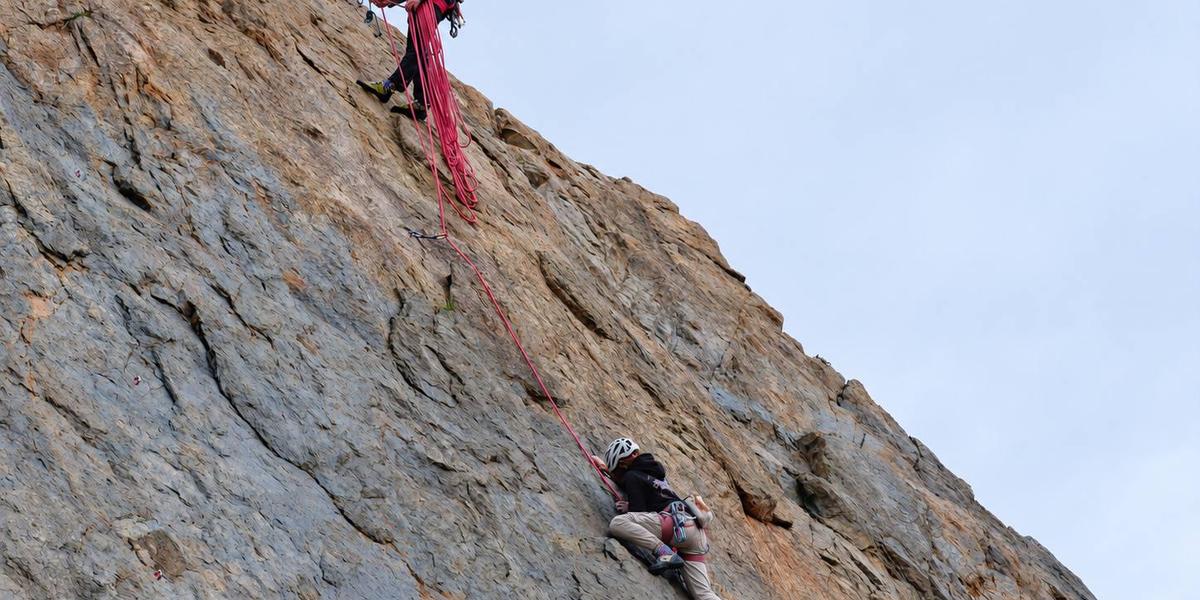
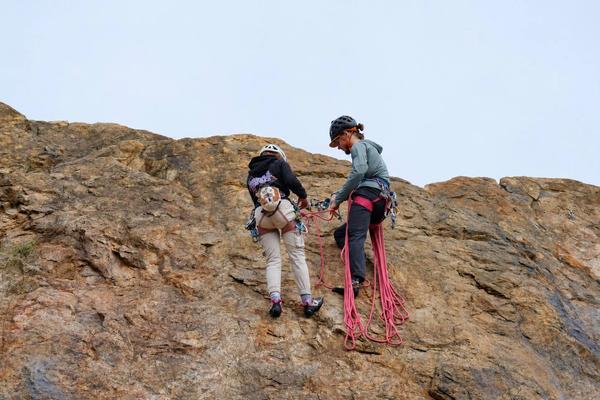
Plenty of people who book with WOOT already climb at a gym. They know how to tie in, they can belay, and they've got a few favourite routes on the wall. Outdoor climbing builds on all of that, but there are some real differences. Here are the main ones.
No coloured holds
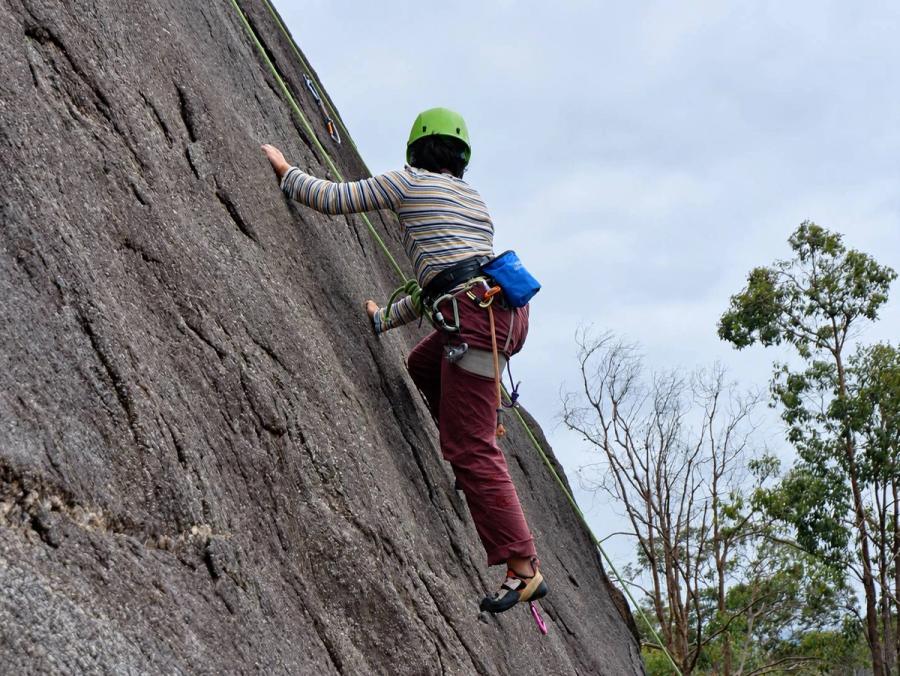
At the gym, the route is marked for you. Outside, there's no tape and no coloured holds, just rock. Part of the fun is learning to read it: spotting edges, cracks and small ledges, and working out which ones your hands and feet can use.
Footwork matters even more
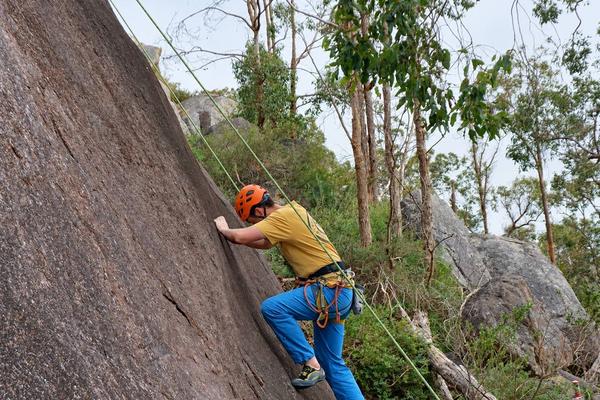
Much of the climbing we do in the Perth Hills is on granite slab, which leans back slightly rather than overhanging. On slab, good footwork and trusting the friction of your shoes matter more than strong arms. Gym climbers are often surprised by how much they end up standing on tiny features.
Anchors and ropes
Indoors, the anchors are fixed and the ropes are usually already hanging. Outside, someone has to build the top rope anchor and check it. On our sessions, I set up and check every anchor, and if you're keen to learn, I'll show you how it's done and why each part is there.
Belaying outside works on the same principles, but the ground isn't flat and padded. We look at where to stand, how to manage the rope on uneven ground, and how to keep communication clear when the climber is further away.
Helmets, weather and the walk in
- Helmets: outside, everyone wears a helmet the whole time, climbing or belaying, because small rocks can fall from above.
- Weather: sun, wind and temperature all change how the rock feels. We make the weather call by 6pm the day before.
- The walk in: most crags have a 5 to 20 minute walk from the car park, so pack light and wear comfy shoes.
- Supplies: there's no cafe at the crag, so bring water, lunch and anything else you need for the session.
Indoor climbing teaches you to move. Outdoor climbing teaches you to read the rock, look after each other and look after the place.
Crag etiquette
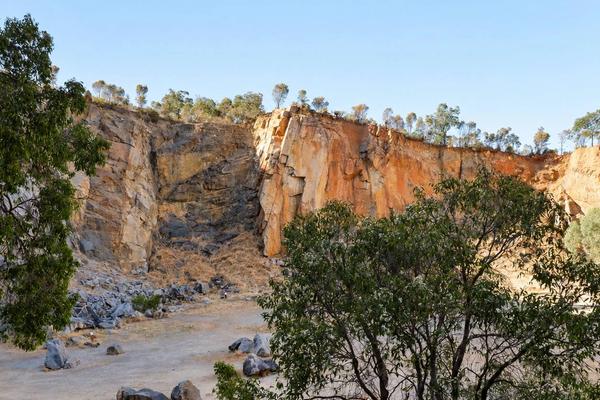
Outdoor crags are shared spaces, often in national parks. Other climbers, walkers and wildlife use them too. Learning crag etiquette (keeping gear tidy, sharing walls, keeping noise down and leaving no trace) is part of climbing outside properly, so you can keep doing it for years.
Which session suits gym climbers
If you climb indoors and want to take it outside, the 5 hour Go Outdoor Climbing session is built for you. You'll learn how outdoor routes, anchors and belaying work at the crag, then put it into practice. Already climbed outside a few times? Our skills sessions cover anchors, rope management, rescue and learning to lead on a top-rope backup.